

For nearly three decades, the Pokémon franchise has revolved around a familiar formula: catch creatures, train them and battle your way through a region. That structure has defined the series since the release of Pokémon Red and Blue in the 1990s, and while the franchise has experimented with spin-offs over the years, few have strayed this far from the traditional blueprint.
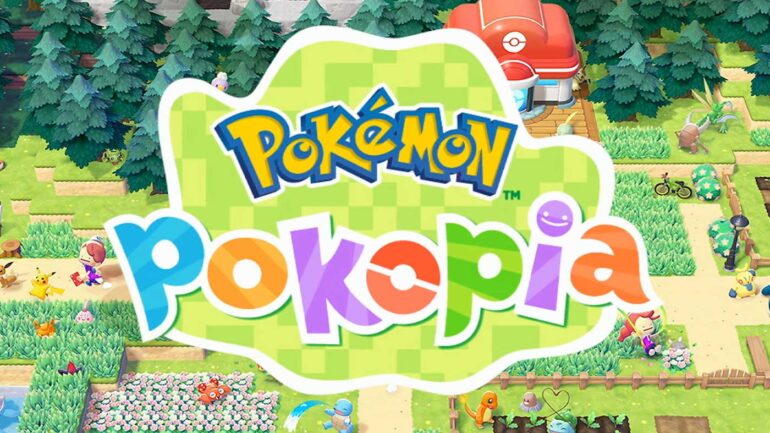
Pokémon Pokopia does exactly that. Developed by Game Freak with assistance from Omega Force and published by Nintendo and The Pokémon Company, the game released March 5, 2025, for the Nintendo Switch 2 and trades competitive battling for something entirely different. Pokopia is a life-simulation and sandbox building experience built around restoration, exploration and creativity.
Instead of competing against other trainers, players are tasked with bringing life back to a mysterious, abandoned world. It is a surprising direction for the franchise, but one that works far better than expected.
A quiet mystery at the center of the story
Pokopia opens with a simple yet intriguing premise. Players take control of a Ditto who awakens in a desolate landscape where both humans and Pokémon have vanished. Soon after, the player meets Professor Tangrowth, a curious researcher trying to understand what happened to the region and why it was abandoned.
The story establishes the player’s role quickly: restore the land and encourage Pokémon to return. The more habitats and ecosystems you rebuild, the more species appear again.
It is a quieter narrative than most Pokémon games, but that change fits the tone perfectly. Rather than focusing on villains or legendary battles, Pokopia emphasizes environmental recovery and discovery. The mystery of the missing humans and the abandoned settlements lingers in the background, providing motivation without overwhelming the relaxed pace of the game.
Building habitats instead of battling
Where Pokopia truly separates itself from other Pokémon games is in its gameplay loop. Rather than capturing Pokémon in Poké Balls and forming a battle team, players create habitats designed to attract distinct species.
Each Pokémon prefers certain environmental conditions. Some thrive near water or vegetation, while others prefer rocky terrain or open spaces. By placing decorations, planting greenery and adjusting environmental features, players gradually build spaces that feel welcoming for specific Pokémon.
Once a Pokémon arrives, it often brings a new ability that helps expand the player’s capabilities. A water-type Pokémon might allow the player to hydrate soil and revive plants, while others grant abilities for cutting vines, breaking rocks or altering terrain.
These abilities create a gradual progression system that naturally opens new areas of the world. Early on, exploration feels limited. As more Pokémon join the community and share their abilities, the map begins to expand in meaningful ways.
It is a clever design that replaces traditional leveling with something more organic.
A sandbox full of cozy inspiration
Pokopia draws inspiration from several well-known sandboxes and life-simulation games. The building mechanics and block-based terrain shaping recall Minecraft, while the relaxed pace and community-focused gameplay evoke the charm of Animal Crossing: New Horizons and Stardew Valley.
Yet the game never feels like a simple imitation of those titles. Instead, it blends ideas from each genre into something uniquely suited to the Pokémon world.
Restoration becomes a central activity. Players rebuild roads, repair buildings, replant forests and remove debris scattered throughout abandoned towns. Over time, barren areas slowly transform into colorful, lively spaces filled with wandering Pokémon.
Watching that transformation unfold is one of the game’s most satisfying elements. The more effort players invest in rebuilding an area, the more alive it begins to feel.
The world reacts to the player’s actions, and that sense of progress becomes its own reward.
A world continually expanding
One of Pokopia’s strongest design choices is how it gradually reveals the scale of its world.
At the beginning of the game, the first open region appears massive. Players can explore caves, rebuild structures and search for hidden items scattered throughout the environment. For a while, it seems like this area might represent the entire playable world.
But eventually the game reveals additional lands that can be unlocked once certain environmental goals are met. Each region introduces new challenges and visual themes. One area may focus on repairing damaged waterways, while another requires restoring infrastructure like bridges or rail lines.
These shifting objectives prevent the gameplay loop from becoming repetitive. Each new location presents fresh puzzles and opportunities for creative design.
It also reinforces the idea that the player’s mission extends far beyond a single town. The entire region is waiting to be restored.
Pokémon with personalities
Another standout feature of Pokopia is how it portrays the Pokémon themselves. Rather than existing only as battle companions, Pokémon act more similar to residents in a growing community.
They wander around town, interact with objects and occasionally approach the player with requests or suggestions. Some ask for specific items or decorations. Others want certain environmental conditions to feel comfortable.
While dialogue can occasionally repeat — a limitation given the sheer number of Pokémon species involved — the interactions still add personality to the world. It is easy to develop small attachments to certain Pokémon residents as they help shape the community.
The game even includes small activities like hide-and-seek or mini quests that break up the building and crafting routine.
These moments help ensure that Pokopia never feels too mechanical or task driven.
A refreshing lack of grind
Many life simulation games rely heavily on repetitive resource gathering. Pokopia takes a more forgiving approach.
Materials appear throughout the environment, crafting systems are straightforward and the game frequently rewards exploration with useful items or recipes. Rather than forcing players into long grinding sessions, Pokopia encourages curiosity.
If something looks interesting on the horizon, chances are there is a reward waiting nearby.
This design philosophy keeps the experience relaxing rather than exhausting. Players can spend hours rebuilding towns or simply wandering through landscapes without feeling pressured to complete tasks as efficiently as possible.
The pace is intentionally calm, and that decision works in the game’s favor.
Minor issues along the way
Despite its strengths, Pokopia is not without flaws. Some players may find the building controls slightly awkward when working on larger structures or placing blocks with precision. These issues rarely break the experience, but they can slow down ambitious construction projects.
Additionally, fans hoping for traditional Pokémon battles may feel disappointed by the near absence of combat mechanics. Pokopia focuses entirely on community building and environmental restoration, leaving competitive gameplay behind.
For some players, that shift may take time to adjust to.
However, those willing to embrace the new direction will find plenty to enjoy.
A bold new direction for the franchise
Ultimately, Pokopia succeeds because it commits fully to its concept. Rather than attempting to combine battling with sandbox building, the game confidently focuses on creativity and exploration.
The result is one of the most distinctive Pokémon spin-offs in years. It demonstrates that the Pokémon universe can support far more types of experiences than the traditional RPG structure.
For longtime fans, Pokopia offers a fresh way to interact with a familiar world. For newcomers, it provides an approachable entry point that emphasizes creativity rather than competition.
Most importantly, it proves that even after nearly 30 years, the Pokémon franchise is still capable of surprising its audience.
And once players begin restoring the first abandoned town and watching Pokémon slowly return, it becomes exceedingly difficult to stop.