

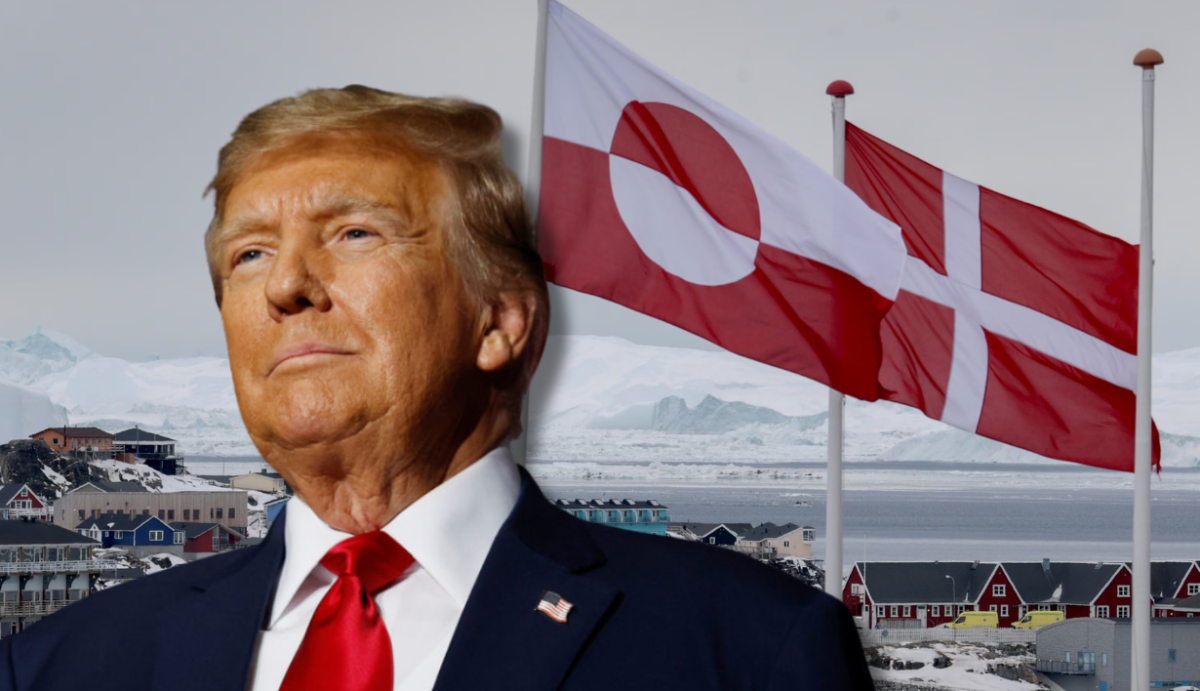
After seven years, Trump has revived his bid to purchase Greenland. Despite Danish Prime Minister Mette Frederiksen dismissing the notion as “absurd,” the United States president continues to fuel a century-old American ambition.
U.S. interest in Greenland dates to the 19th century, driven by its Arctic position and resources like whale blubber and coal. Secretary of State William H. Seward championed the idea in 1867, believing it would position America to command global trade. A secret $100 million offer followed in 1946, which Denmark rejected.
Through a 1951 defense pact, Denmark granted the U.S. a military base in its territory, one it maintains and could expand. Still, Trump insisted the U.S. must purchase the territory, not merely sustain its military presence.
Political content creators such as Fubar Pac related this enduring compulsion to influential backers; key Trump donors, including the Blackstone Group and PayPal co-founder Peter Thiel, also fund Praxis. This tech startup, founded by Dryden Brown, aims to build a sovereign city in Greenland to enforce its own laws, promote “traditional Western beauty,” and trade cryptocurrency. While some see this as a hidden motive behind Trump’s push, others dismiss any direct link.
In his first term, Trump framed the pursuit as a “large real estate deal.” Since then, the rationale escalated into one of great-power competition, with Trump attesting that Russia or China will overtake Greenland. In a Jan. 18 message to Norwegian Prime Minister Jonas Gahr Støre, he insisted Denmark could not defend the territory and that the U.S. required “complete and total control of Greenland” to maintain the security of the world.
As the standoff deepened, Trump turned to pressure. On Jan. 19, he announced 10% tariffs on Denmark, Norway, Sweden and other European opponents—set to rise to 25% by June 1 if no deal is reached. He made clear the tariffs would remain until the U.S. acquired Greenland. Beyond economic measures, Trump hinted at withdrawing from the North Atlantic Treaty Organization (NATO), effectively prioritizing Greenland over the transatlantic alliance.
The confrontation escalated to military posturing. In recent remarks, Trump dismissed NATO’s Article 5 collective defense clause, stating, “I don’t need international law. I’m not looking to hurt people,” while refusing to rule out using force to obtain Greenland. In contrast, Louisiana Gov. and proposed Special Envoy for Greenland Jeff Landry insisted the administration has no intention to “conquer anybody.” In response, Denmark deployed fighter jets and troops to Greenland.
Financing the purchase remains a critical, unanswered question. Trump has declared he is “not talking about money for Greenland yet,” despite promising $100,000 to each citizen. He has proposed using tariff revenue to fund the acquisition, but this faces a legal hurdle: the Supreme Court is expected to rule on the constitutionality of the tariffs themselves. If struck down, the U.S. could be forced to refund the money, leaving no clear path to finance the deal.
With tensions mounting, an annexation attempt cannot be ruled out. Such a move would trigger a major international crisis, collapse NATO and likely lead to war with Denmark. Only time will tell whether Trump pursues diplomacy—or bloodshed.