In 2018, Katy and Haydn Schneider launched Alani, a line of energy drinks whose bright, colorful cans and sweet flavors quickly found a following among teen girls and female college students. Sensing the growing demand for women-focused energy beverages, Monster Beverage Corporation (MBC) launched FLRT. However, it has not delivered the results the company hoped for.
MBC first entered the energy drink market on April 18, 2002, with the debut of Monster. That original drink featured a green claw mark and an apple-like flavor. Today, the brand offers over 300 varieties worldwide, from Java Monster to Zero Ultra and beyond.
Over the years, MBC built a loyal following among young adults, especially in gaming and extreme sports, maintaining a largely neutral brand identity—until now.
FLRT, the newest addition to the lineup, launched on March 16 to meet rising demand for female-focused wellness beverages. The line includes flavors such as Berry Tempting, Guava Lava, Strawberry Fling and Sunset Squeeze.
On drinkflrt.com, the company promotes the 200-milligram drinks as sugar-free, immune-supporting and collagen-boosting—a departure from other MBC drinks, which typically focus on B-vitamins and electrolytes. The ingredient list includes Vitamin A, Niacin, Biotin, Pantothenic Acid and Zinc.
Currently, FLRT is sold only in colleges and high schools. At ULM, it can be found in the far-right refrigerators in the Pod at the HUB.
“I really enjoyed the strawberry flavor,” pre-pharmacy sophomore Alissandra Melancon said. “I have been getting it often from the HUB on the weekdays.”
Though marketed toward women and designed to support skin, hair and immunity, FLRT is not a female-owned brand. Allegedly, a team of women developed FLRT, but there is no evidence proving this. That factor has left a sour taste in students’ mouths.
The name itself along with the individual drink names carry a seductive undertone. In contrast, names such as Reign and Redbull evoke a sense of power and intensity. According to sophomore psychology major Elijah Walker, names such as Reign “sound like they will make you a god of war.” FLRT, however, suggests that energy drinks marketed to women should center on appearance and desirability rather than focus, stamina or performance. These are qualities MBC long emphasized in its original line.
“The names are very stereotypical. Like Berry Tempting? Strawberry Fling? Maybe the creators did not think it through when putting gender on the cans,” general studies sophomore Eve Camarena said.
Though initially advertised as Monster’s energy line for women, that framing has struck many as a reductive marketing ploy—one that overlooks the women who have been loyal Monster drinkers for years, long before FLRT ever hit shelves.
“Maybe if we never progressed past 2007, FLRT might have been necessary, as a marketing gimmick,” senior English major Garrett Haas said. “Monster, at least under my observation, does not need a ‘female’ version of the drinks they make, especially now, as it seems to have a unisex appeal.”
Monster Beverage appeared to take the constructive criticism to heart, revising the divisive language ahead of the official release. The website now reads: “FLRT was born from a simple belief: energy should be as bold, vibrant and as unapologetic as the people that drink it.”
While less common due to the popularity of the 16-ounce size, MBC does sell 12-ounce cans, typically priced at $2.49 before tax. FLRT drinks, notably, cost $2.99 before tax. Some of that may come down to the hype of a new product. However, critics online have pointed to it as another example of the “pink tax”. This is the practice of charging women more than men for essentially similar products, creating a hidden financial burden based on gender.
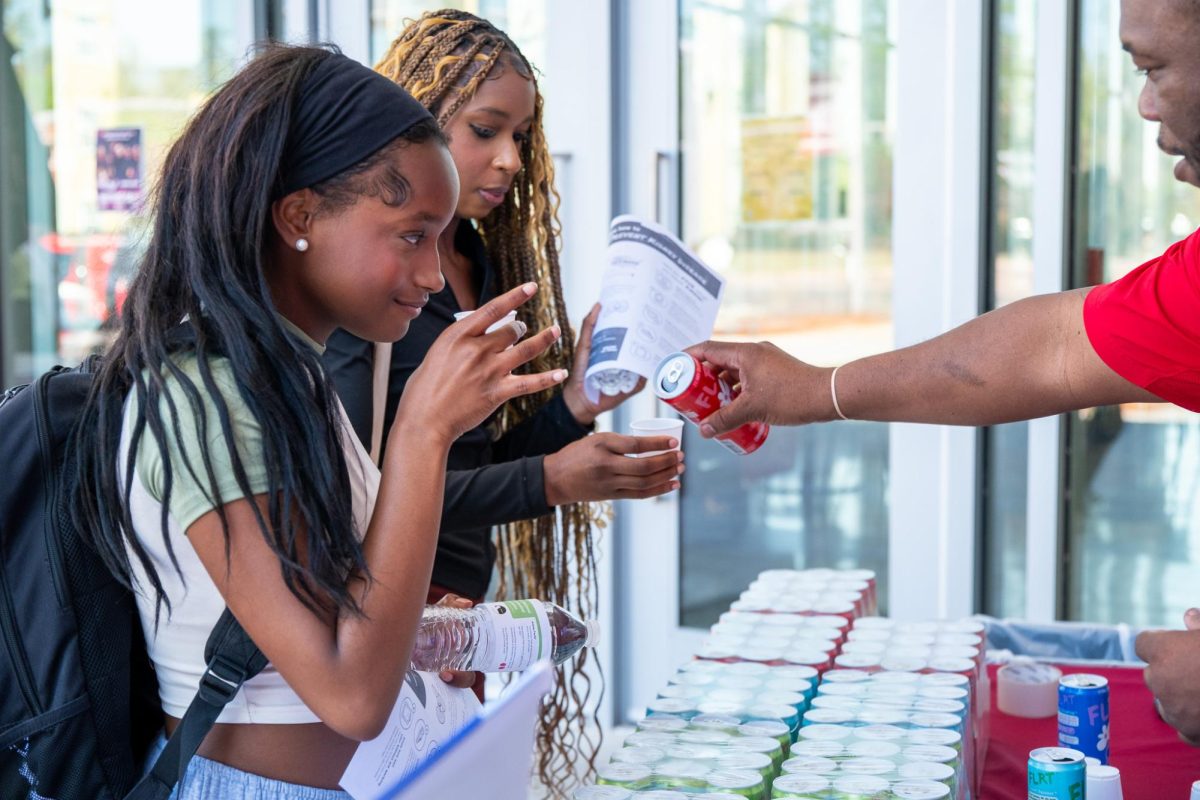
On March 26, the HUB hosted a sampler led by Cortez Brown, Manager of Coke’s Business Development Sales, and his team. The event gave consumers a chance to taste FLRT’s new energy drink line while the company gathered feedback to make the most of its limited release window.
Students who attended the sampler, such as freshman psychology major Tayen Billiot, found it delightful and reported feeling refreshed.
“It was one of the cleanest energy drinks I have ever tasted. It does not make your stomach hurt from how sugary it is. The aftertaste is not syrupy either, very natural.”
For now, FLRT sits in the HUB’s refrigerators, a quiet addition that has sparked more conversation than thirst. Whether it will eventually earn a permanent spot among Monster Beverage’s lineup or fade out as a misguided experiment may ultimately depend on whether the company listens to the voices it claims to want to energize.