

This is an opinion, which reflects the views of the individual reporter and not the Hawkeye as a whole.
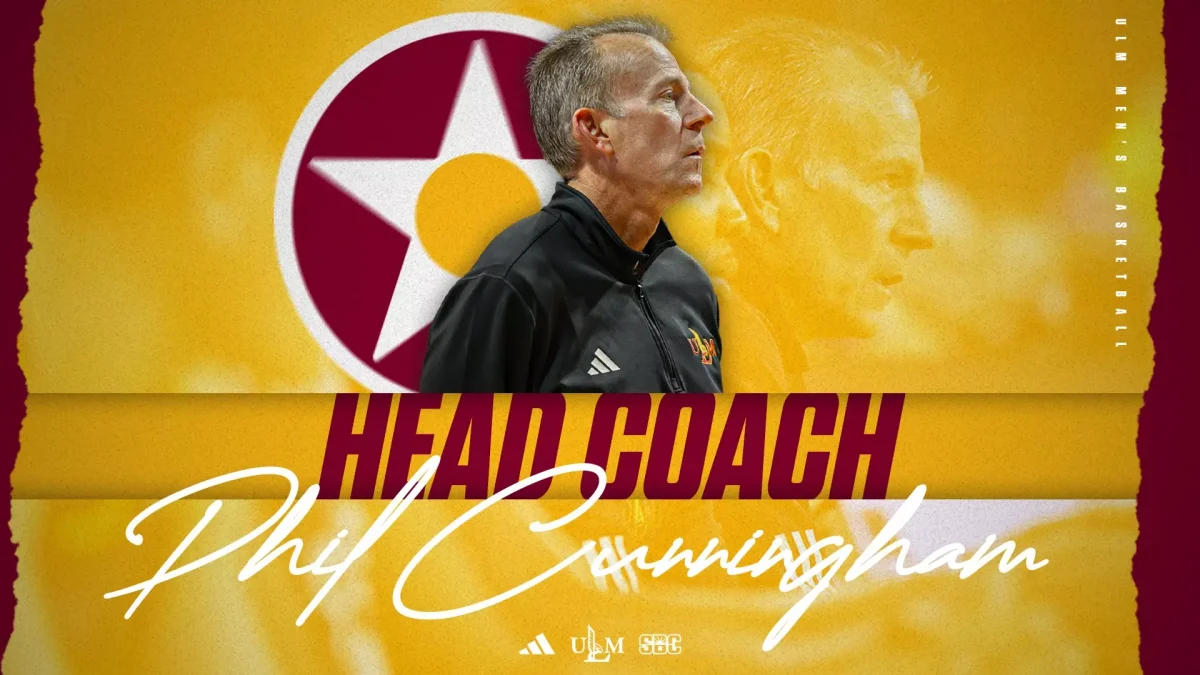
On Monday, March 9, the ULM Athletic Department announced that the men’s basketball team’s head coach, Phil Cunningham, was “relieved of his duties.” Derrick Zimmerman will step in as interim head coach until the athletic department finds someone to replace him.
Cunningham was dealt one of the worst hands in ULM history during his first year coaching the Warhawks. He took over the program from longtime head coach Keith Richard after 15 seasons. This was a major transition period for The Warhawks since Cunningham had to work with a new system, staff and roster during his first season as head coach—all of which put immediate and intense pressure on him.
In terms of rebuilding the team, only three players from the previous year’s roster stayed at ULM. Cunningham had to recruit around 10 other players through either the transfer portal or high school. With the recent NIL takeover and ULM being the lowest funded Sun Belt Conference team by almost $8 million, his options were slim.
For his first year, Cunningham had to manage a lack of player leadership, as almost the entire team was new. Time spent together is a vital part of building chemistry and player leadership. Leaders maintain the energy needed for everyday activities. Player leadership helps teams survive adversity. Without strong team leaders, players can feel lost and may react negatively to game outcomes.
In terms of actual play, the Warhawks were faced with injuries before the season even started. Transfer forward Brentay Noel, who was expected to massively help ULM in the frontcourt with rebounds and offensive identity, missed the entire season due to an injury. Yes, the team underperformed this season, only winning four games overall, and one game in conference play. My question for the ULM athletic department is, do we want to set a precedent of not backing our coaches, even if it is not who the current athletic director hired?
Freshman players were forced into big roles that everyone knew they were not ready for. Cunningham had to shorten rotations due to a lack of help in the second half of the lineup. The record does not fully grasp the team’s potential that they held through the season when key players were not available. The coach before him, Richard, was given three seasons of below-10 wins before he was finally able to finish the season 10-17. Even after the 10-win season, Richard had four more seasons of winning less than 10 games. Why did he get so much grace, yet Cunningham is gone after one season? I understand that the times have changed with NIL, but the plan was never to win in the first season anyways.
The Warhawks were predicted to finish last in the Sun Belt, even if everything was to go right for them. The biggest argument for Cunningham is that he deserved more time at ULM. From my few talks with him, he knew what he was doing, evident from the winning seasons at Troy, and he had plans for the coming years that he is now not able to execute. Most universities give coaches three to four years of coaching before they reconsider their position. But the Warhawks, who are already known for not winning, decided moving on after one year was the correct move.
Cunningham already understood the program. He was at ULM as an assistant coach for one season, which meant that he had a relationship with a few of the players already, and he had knowledge of the recruiting areas and experience with the university’s resources. Replacing someone who already had knowledge within the program may create more instability than it will help.
Constant coaching turnover hurts many small programs. Universities such as ULM have smaller budgets, fewer recruiting resources and way less national exposure. Recruits can become uncertain when choosing the program, players will transfer out because the coach they came for is not here anymore, and the program is in the same predicament it was when they first hired him.
If Cunningham was given no grace, why does the football coach still have a job at ULM? Yes, he went closer to .500 in his first season, but with an arguably easier schedule in his second season, they went 3-9. In both of his seasons, the Warhawks ended the season on at least a six-game losing streak, showing that he cannot execute later in the season.
Rebuilding requires patience. Although it is the NIL era, and rebuilding takes less time, it still takes some time. Programs that succeed long-term often do it because they stick with a coach throughout all the hardships. If the argument for ULM is that they did not want another 15 years of middle-class performance such as with Richard, then that is completely fair. But you cannot figure out what a coach can do from one year with a completely new team.
This decision may have been a scapegoat for the program. A losing season is not always the coach’s fault. As previously mentioned, many other factors are attributed to success, such as fundings, recruiting resources, NIL opportunities and conference competition.
Firing Cunningham treated the symptoms rather than the root of the problem.




GraysonHawk • Mar 23, 2026 at 4:07 pm
It was an unjust firing, but if they’re going to replace him- it better be with a much younger candidate with a vision and motivation for the future. Cunningham had been around for decades in the coaching ranks, yes experienced but not exactly with much youthful inspiration.
Thomas Dowell • Mar 18, 2026 at 1:12 pm
Excellent article, I wholeheartedly agree, so unfair.